Canyon Trail Scarf: Easy Free Crochet Pattern
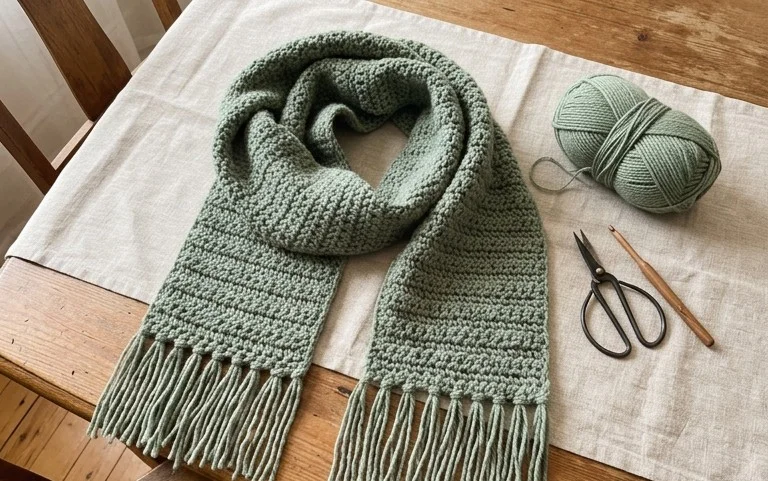
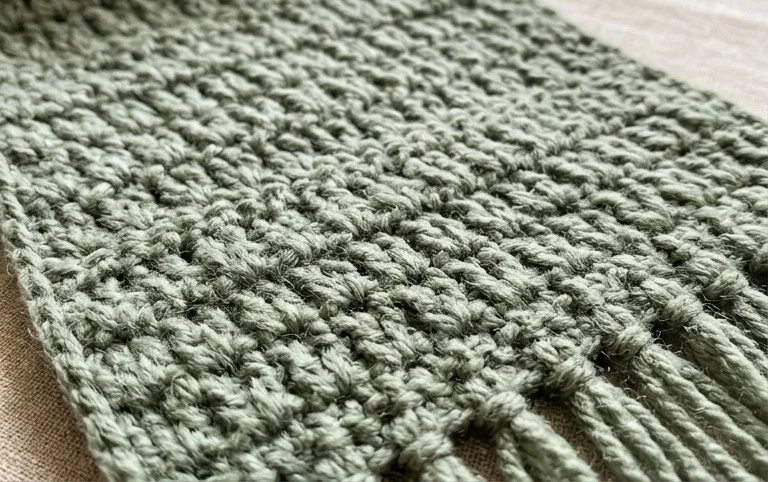
Soft wool against your neck makes even the coldest morning walk manageable. This scarf has a deep, rhythmic texture that mimics the uneven stones found on a mountain path. It is a relaxing project for beginners who want to move past basic flat stitches without getting stuck on complex counting. You will focus on alternating single and double crochet stitches to build that signature wavy look. Whether you are using a muted earth tone or a deep forest green, the end result is a warm accessory that hangs beautifully. Grab your hook and prepare to settle in for a long, quiet evening of stitching.
Why You’ll Love This Pattern
This classic crochet dishcloth relies on the durable yet absorbent nature of 100% cotton yarn. The textured stitch pattern, known as the grit stitch, creates a thick fabric that scrubs surfaces effectively without scratching delicate finishes. You can complete this project in under an hour, making it an ideal choice for testing out a new color or clearing out small leftover yarn scraps. The repetitive nature of the stitch makes it a perfect project for relaxing in front of the television or during a commute.
I managed to make three of these in a single evening. The texture is much more effective for scrubbing dishes than the flat single crochet cloths I used to make.
— Sarah, home crafter
Pattern Overview & Skill Level
- Skill Level: Beginner
- Approximate Time: 45 to 60 minutes
- Construction: Worked in flat rows, turning at the end of each row.
- Finished Dimensions & Sizing: 8 inches by 8 inches.
Materials & Supplies Needed
- Yarn: Worsted #4 weight, 100% cotton, approximately 60 yards per dishcloth.
- Hook Size: 5.0 mm (H-8).
- Notions: Tapestry needle for weaving in ends, scissors.
- Safe yarn substitutions: You can use a cotton-acrylic blend, but ensure the cotton content is at least 50% for maximum absorbency. Using a lighter weight yarn will result in a smaller square unless you increase the starting chain count.
Stitch Guide & Abbreviations (US Terms)
- ch = chain
- st = stitch
- sc = single crochet
- dc = double crochet
- sk = skip
- Grit Stitch: A stitch sequence consisting of (1 sc, 1 dc) worked into the same stitch, then skipping the next stitch.
Step-by-Step Pattern Instructions
Main Body
The foundation chain should be an odd number to maintain the pattern symmetry.
- Row 1: Ch 31. Work (1 sc, 1 dc) into the 2nd ch from the hook. Sk next ch, (1 sc, 1 dc) in next ch. Repeat from * to * until 2 ch remain. Sk next ch, 1 sc in last ch. Turn. (30 sts)
- Row 2: Ch 1. Work (1 sc, 1 dc) into the first sc. Sk the next dc, (1 sc, 1 dc) into the next sc. Repeat from * to * across, ending with a skip of the last dc and 1 sc in the turning ch. Turn. (30 sts)
- Rows 3-30: Repeat Row 2 until the piece measures approximately 8 inches from the starting edge.
Finishing
After completing Row 30, fasten off the yarn, leaving a 6-inch tail. Use your tapestry needle to weave the tail securely back and forth through the stitches on the back side of the fabric to prevent unraveling during washing. Trim any excess yarn close to the fabric surface.
Care & Washing Instructions
- Machine wash on a warm, gentle cycle using mild detergent.
- Tumble dry on low heat or lay flat on a towel to air dry to maintain shape.
- Reshape the dishcloth while it is still damp by pulling gently on the corners to ensure it remains a perfect square.
Pro Tips & Common Mistakes to Avoid
Pay close attention to your tension when working the double crochet stitches. If your tension is too loose, the cloth will lose its scrubby texture and become limp. Always use a stitch marker on the first stitch of every row to ensure you are working into the correct turning chain space; this prevents the sides of your cloth from accidentally tapering inward. When weaving in your ends, weave in a zig-zag pattern across at least three rows to ensure the yarn does not pop out after repeated use in water. If you want to make the cloth larger, simply increase your starting chain by any odd number; note that this will require more than 60 yards of yarn.
Frequently Asked Questions
Can I use synthetic yarn for these dishcloths?
It is best to stick to 100% cotton or cotton-linen blends. Synthetic fibers like acrylic are hydrophobic, meaning they repel water and will not effectively clean dishes or absorb moisture.
How do I adjust the size of the dishcloth?
You can adjust the size by adding or subtracting from the starting chain. Ensure the total number of chains remains an odd number so the stitch pattern repeats correctly.
Is this pattern suitable for someone holding a crochet hook for the first time?
Yes, this project only requires knowledge of two basic stitches and the ability to turn your work. It is an excellent way to practice maintaining even tension across a row.
Can I sell the finished items made from this pattern?
You are welcome to sell finished products made from this design. Please credit the original pattern designer when selling online or at local markets.
Wrapping yourself in your finished work brings a sense of accomplishment that store-bought items simply cannot provide. If you want to experiment, try using a slightly thicker bulky yarn for a faster, chunkier result that adds even more warmth during winter. Posting a photo of your finished work helps other makers see how different color choices change the final look of the piece. You can find more free patterns in our archive to keep your needles and hooks moving through the next season of projects.